
Sheer vs Blockout Curtains: Which Is Better for Your Melbourne Home?
Compare sheer vs blockout curtains for privacy, light control, bedrooms, living rooms and layered window furnishings in Melbourne homes.
The sheer vs blockout curtains decision is really a choice between different jobs. Sheer curtains soften daylight and add a light, layered finish to a room. Blockout curtains are designed for stronger privacy and light control. In many Melbourne homes, the best answer is not one or the other—it is using both layers where the room needs to change from bright and open during the day to private and dark at night.
Your choice should start with how the room is used, the direction of the windows and how much privacy, glare and temperature control matter. The same curtain solution will not necessarily suit a north-facing living room, a street-facing bedroom and a home office with screen glare.
What sheer curtains do well
Sheers diffuse harsh daylight and soften the appearance of large windows without making the room feel closed. They work particularly well in living and dining areas where homeowners want natural light but prefer a more finished look than bare glass.
Sheers can provide daytime screening, but they should not be relied on for complete night privacy. When interior lights are on and the outside is dark, visibility can change significantly. If privacy after dark matters, plan a second layer such as a blockout curtain or blind.
What blockout curtains do well
Blockout curtains provide stronger control over light and privacy. They are well suited to bedrooms, nurseries, media rooms and windows that face bright street lighting or early morning sun. Fabric, lining and installation all influence performance, so the word blockout alone does not tell you how dark a room will become.
Fit matters. Light can enter around the top, sides and bottom of a curtain even when the fabric itself is opaque. A well-measured track, suitable fullness and thoughtful placement help the curtain perform more consistently.
When layering both makes sense
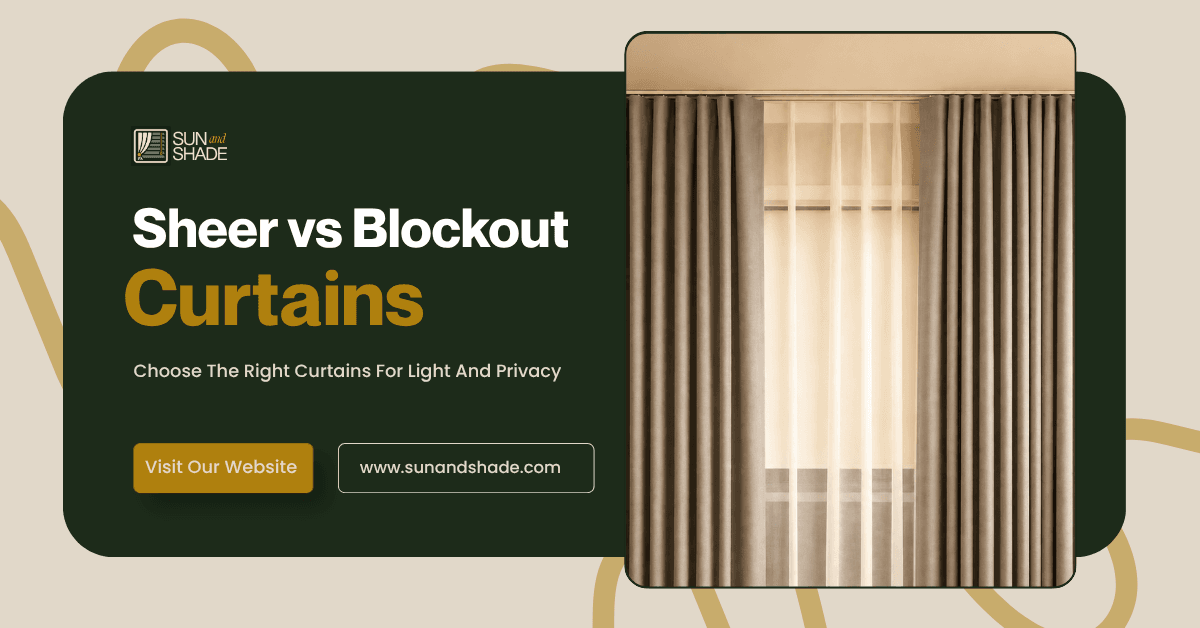
Layering allows each curtain to do one job well. During the day, the sheer layer filters light and keeps the room visually soft. At night, the blockout layer can close for privacy and darkness. This combination is common in bedrooms and formal living spaces because it gives homeowners more control without compromising style.
Layering also gives flexibility across Melbourne's variable weather. A room can be opened to daylight when conditions are mild, then closed down more fully when glare, heat or cold becomes uncomfortable.
Room-by-room curtain choices
Living rooms usually benefit from light flexibility, so sheers or layered sheers with a secondary blockout option work well. Bedrooms often prioritise darkness and privacy, making blockout performance more important. Home offices need glare control, while rooms with large glass areas may benefit from layered treatments that can respond to sun through the day.
Bathrooms and wet areas are different. Fabric curtains may not be the best option where moisture is persistent, so shutters or suitable blinds can be a more practical choice. The product should match the room environment as well as the look.
Measure and installation matter as much as fabric
Curtains that are too short, narrow or poorly positioned can underperform even when the fabric is appropriate. Ceiling-mounted or high-mounted tracks can create a cleaner line and increase coverage. Fullness affects how the fabric hangs and how effectively it closes across the window.
For wide openings and floor-to-ceiling glass, professional measuring helps account for stack-back, door access and how the curtains will move in daily use. The best layout is the one that works when the room is actually occupied, not only when photographed.
Practical Action Plan
Before choosing fabric, stand in the room at the times when light and privacy matter most. Note direct sun, screen glare, views from outside, street lighting and where the curtain can stack when open. Decide whether the room needs daytime softness, night privacy, strong darkness or a combination. Taking these observations into a measure-and-quote appointment makes it easier to choose between a sheer, a blockout layer or a paired solution based on how the room actually behaves.
One More Point to Consider
Colour and fabric texture also affect the final result. Light-coloured sheers can keep a room visually bright, while heavier blockout fabrics can create a stronger architectural presence. Ask to see samples against the wall colour and in the actual daylight of the room, not only under showroom lighting. This helps you judge transparency, undertone and how the fabric changes from morning to evening. The most successful choice usually balances function first and then uses colour, fullness and heading style to complete the interior look.
How Sun & Shade helps Melbourne homeowners choose
Sun & Shade provides made-to-measure curtains, blinds, shutters, awnings and privacy screens across Melbourne. The team measures each window and can combine products by room, which is useful when one space needs soft daylight while another needs stronger blockout performance.
A free in-home measure and quote also allows fabric, track position, window size and room use to be considered together. That is especially important in Melbourne homes with high sash windows, sliding doors or floor-to-ceiling glazing where an off-the-shelf curtain may leave gaps or restrict access.
Conclusion
Sheer curtains are best when the priority is soft daylight and an airy finish. Blockout curtains are stronger when the priority is darkness and privacy. For rooms that need both, layering provides the most flexible solution. Match the curtain to the room first, then choose fabric and styling details that support how the space needs to work throughout the day.
Frequently Asked Questions
Are sheer curtains private at night?
Sheer curtains usually provide their strongest screening during daylight. At night, when lights are on inside, visibility from outside can increase. Add a blockout curtain or blind if complete evening privacy is important.
Do blockout curtains make a room completely dark?
They can significantly reduce light, but fabric is only part of the result. Light can enter around tracks and edges, so accurate measurement and installation are important for stronger room darkening.
Can I use sheer and blockout curtains together?
Yes. Layering is a practical way to get filtered daylight during the day and stronger privacy and light control at night. It also gives the room a more flexible response to changing weather and sun.
Which curtains are best for bedrooms?
Bedrooms usually benefit from stronger light control, so blockout curtains or a layered sheer-and-blockout combination are common choices. Consider street lighting, window direction and how dark you prefer the room for sleep.
Should curtains be made to measure?
Made-to-measure curtains are useful when windows are large, unusually shaped or when you want better edge coverage and a precise track position. Professional measuring can also account for stack-back and access around doors or furniture.