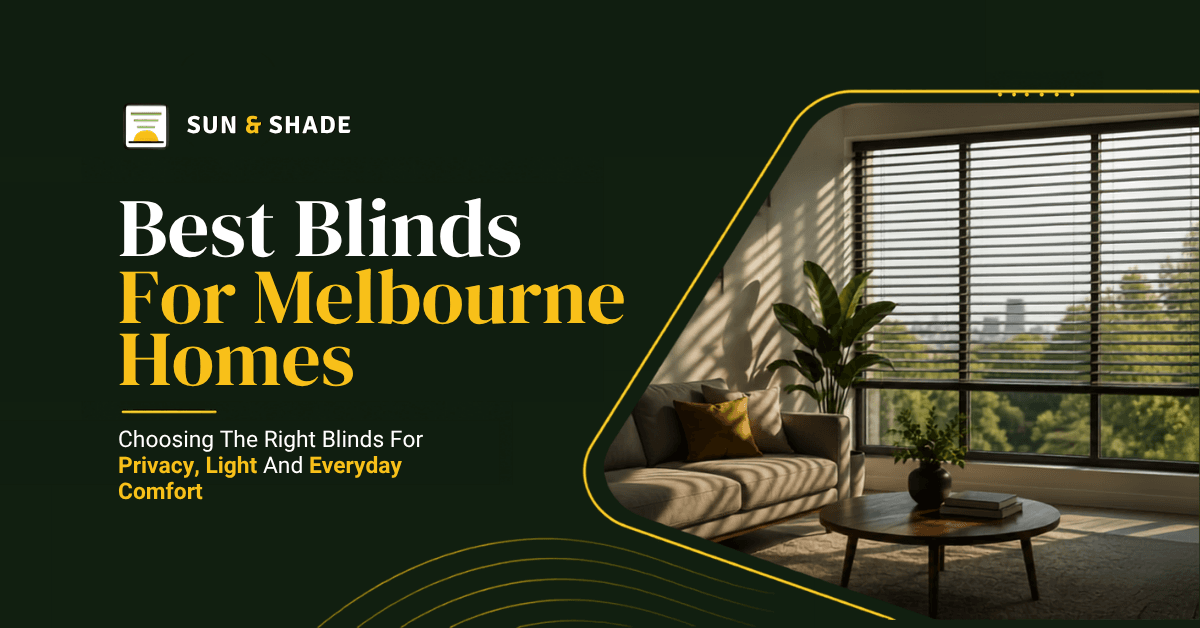
Best Blinds for Melbourne Homes: Choose for Light, Privacy and Changing Weather
The best blinds for Melbourne homes are the ones chosen for a specific window, room and time of day — not simply the style that looked best in a showroom. A west-facing living room dealing with afternoon glare has a different problem from a street-facing bedroom that needs privacy at night. Add Melbourne's changeable seasons, older window styles and newer apartments with large areas of glass, and one blind type rarely solves every room equally well.
Good window furnishing decisions start by defining what the room needs from light. Do you want to soften glare without losing the view, make a bedroom darker, reduce direct sun, add privacy or create a clean finish that works with other furnishings? Once the priority is clear, fabric, openness, fit and operating style become much easier to choose.
Thermal comfort is another reason fit matters. Australian Government guidance notes that windows can be a major source of heat gain and heat loss, and well-fitted window coverings can improve comfort. Blinds are not a replacement for appropriate glazing or building design, but they can be an important part of how a room manages light and temperature through the day.
Choose Roller Blinds When You Want Simple, Flexible Control
Roller blinds suit many Melbourne interiors because the mechanism is compact and the visual line is clean. They can work in home offices, bedrooms, living areas and apartments where bulky window treatments would compete with the space. The key choice is not only the roller system; it is the fabric.
A light-filtering fabric can soften daylight and reduce glare while keeping a room brighter. More opaque fabrics increase privacy. Blockout blinds are designed for situations where reducing incoming light is the priority, such as bedrooms, media rooms or spaces affected by strong evening sun. The amount of light that still enters around the edges depends heavily on how the blind is measured and fitted.
For large windows, consider how often the blind will be raised and lowered and whether multiple blinds will work better than one very wide span. Dividing a large opening can make operation more practical and allows different zones of light control, but the visual breaks need to align with the window structure.
Match Privacy Blinds to Daytime and Night-Time Needs
Privacy is not one setting. A sheer or sunscreen-style blind may make it harder to see into a home during bright daylight while still allowing outward visibility, yet the effect can change after dark when the interior is illuminated. Homeowners should think about the room at both 2pm and 8pm.
Street-facing bedrooms and ground-floor living rooms may need a more opaque layer at night. In some homes, a dual-blind arrangement can separate daytime glare control from evening privacy. In others, a blind paired with curtains creates more flexibility and a softer interior finish.
Window height and neighbouring properties matter as well. A second-storey room may need glare reduction more than visual privacy, while a townhouse courtyard or close boundary can make privacy a daily concern. The best choice responds to the actual sightlines around the home rather than relying on a generic privacy rating.
Think About Orientation Before Colour
Melbourne homes experience very different solar conditions depending on orientation, surrounding buildings and season. West-facing glass can receive strong late-afternoon sun. North-facing windows may receive valuable winter sun but need summer management depending on shading. East-facing rooms can be bright early in the day.
Fabric colour influences appearance and can affect how much visible light a blind absorbs or reflects, but orientation and fit usually deserve attention first. A beautiful fabric will not solve a glare problem if it is too transparent for the room's exposure. Similarly, a heavy blockout solution may be unnecessary in a kitchen where the homeowner wants soft morning light.
This is where made-to-measure planning becomes useful. Exact measurements reduce unwanted gaps, and the installer can consider handles, recess depth, window trim and the way the blind sits relative to the glass. Your Home, the Australian Government's sustainable housing resource, notes that snugly fitted window furnishings can help improve the thermal performance of windows by reducing air movement around the covering.
How Sun & Shade Approaches Melbourne Window Furnishings
Sun & Shade provides custom curtains, blinds, shutters, awnings and screens made to measure for Melbourne homes. The service is built around an in-home consultation, measurement and installation rather than asking homeowners to choose a product from dimensions alone.
The company's portfolio includes roller blinds and Venetian blinds, alongside other window furnishing options. That broader range is useful because the best solution for one room may not be the best solution for the rest of the house. A home office may suit roller blinds, a bathroom may call for another material or product type, and a living area may benefit from layered furnishings.
Sun & Shade is based in Hoppers Crossing and serves Melbourne and surrounding suburbs. The local approach means the conversation can include the window, the room, the light and the way the household actually uses the space before a final product is selected.
Use a Room-by-Room Checklist Before You Order
Before comparing fabrics, stand in each room at the times when the problem is strongest. Note where glare lands, whether people can see in from outside, whether the room overheats, and whether darkness is important for sleep or screens. A five-minute observation often produces a better brief than choosing from a product category first.
Then decide the priority order. A bedroom might rank darkness first, privacy second and daytime view third. A living room may reverse that order. A home office may prioritise screen glare and adjustable daylight. These priorities help resolve trade-offs when one fabric cannot maximise every outcome.
Finally, consider cleaning, operation and long-term use. Homes with children or pets may need particular control options. High or difficult windows may benefit from a different operating solution from a standard window. A professional measure can also identify whether recess fitting or face fitting makes more sense for light gaps and the window frame.
The best blinds for Melbourne homes are rarely chosen by trend alone. They are chosen by matching the product to the window's orientation, the room's purpose and the household's need for light, privacy and comfort throughout the year.
Frequently Asked Questions
What are the best blinds for Melbourne homes?
The best choice depends on the room, window orientation and the level of light and privacy required. Roller blinds are a versatile option for many interiors, while more opaque or blockout fabrics can suit bedrooms and media spaces. A room-by-room assessment is more reliable than choosing one blind type for the entire house.
Are roller blinds good for Melbourne homes?
Roller blinds can work well because they provide a clean finish and can be specified with different fabric types for light filtering, privacy or stronger light reduction. Their performance depends on the fabric and how closely they are fitted to the window. Large or unusually shaped windows may need additional planning.
When should I choose blockout blinds?
Blockout blinds are useful where darkness and privacy are high priorities, particularly in bedrooms or rooms affected by strong glare. They reduce light through the blind fabric, although some light may still enter around the edges depending on the installation. A professional measure can help minimise unnecessary gaps.
How do privacy blinds work during the day and at night?
Some fabrics provide useful daytime privacy when it is brighter outside than inside, but that balance can reverse at night when interior lights are on. Rooms requiring reliable evening privacy generally need a more opaque layer. Homeowners should evaluate privacy under both daytime and night-time conditions.
How does Sun & Shade help choose blinds for Melbourne homes?
Sun & Shade provides made-to-measure window furnishings with local consultation, measurement and installation for Melbourne and surrounding suburbs. The process allows the team to assess the actual window, light conditions and room use before recommending a suitable approach. This can help homeowners compare blinds with other options such as curtains, shutters, awnings or screens where appropriate.